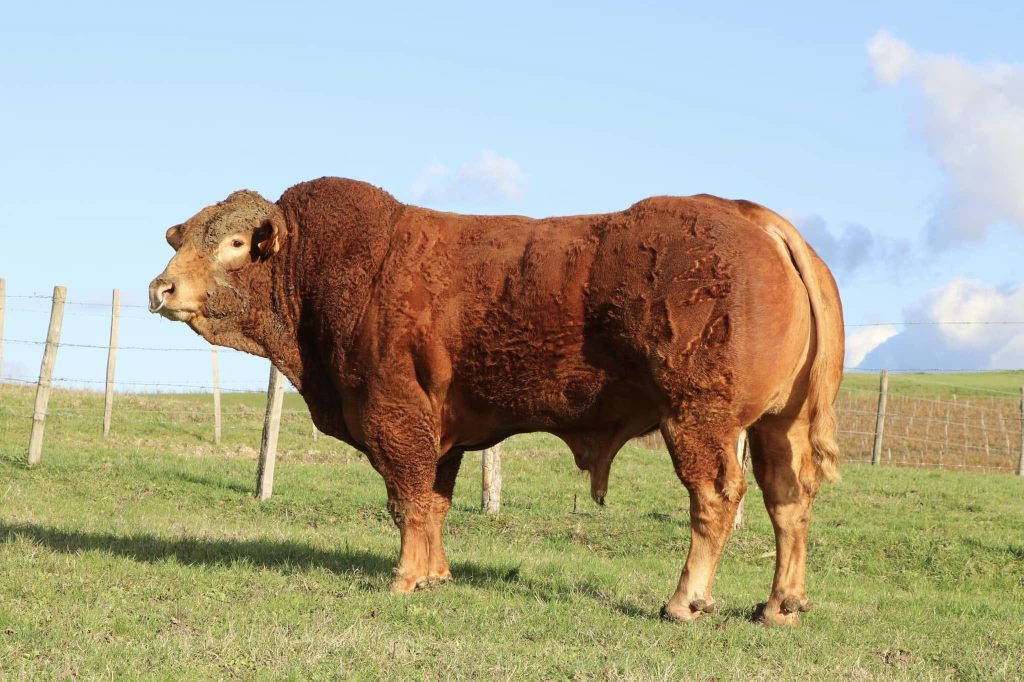
On a Limousin breeding animal’s page, there’s no shortage of figures. Calving ease, growth, weaning index, maternal value… For a breeder buying a bull or a heifer, knowing how to read them is the difference between a good choice and a nasty surprise. Here’s how to find your way, with examples from our own herd.
IBOVAL indexes are calculated by the French national genetic evaluation for beef cattle. They estimate what an animal passes on to its calves, based on its own performance, that of its parents and, later on, that of its offspring.
They are expressed on a base of 100, which is the breed average. An animal at 110 is above average on that trait, one at 90 below. Above all, an index is not a weight: it corrects for the effects of the year, the season and the farm, keeping only the genetic share.
This is the most common mistake. A calf can have modest weights and very good indexes, or the other way round. Twenty is a good example: her start on the scales was modest, at 216 kg at 210 days. Yet her indexes are good, with 105 for muscle and 104 for frame and milk. She passes on more than she showed, because the conditions of her year didn’t reflect her genetics.
Conversely, a great weight in a very well-fed calf guarantees nothing for its offspring. When choosing a breeding animal, the indexes are what count. Weights complete the picture.
Indexes are recalculated several times a year. In a young animal, they rely mostly on the parents and the first weights, so they can still shift by several points. In a cow that has weaned ten calves, or a bull with many offspring, they have become very reliable and hardly move.
This is especially true of maternal indexes. A heifer’s milking ability and maternal value are only a prediction until she has raised her own calves. Keep that in mind when comparing a young female with a proven cow.
Beyond the indexes, some animals receive a qualification from the French Limousin Herd-Book, awarded on the basis of their own performance and that of their progeny. For females, these include Reproductrice Reconnue (recognised breeding cow) and, one step higher, Reproductrice Recommandée (recommended breeding cow). For males, the “Veaux Sevrés en ferme” qualifications are based on calves actually weaned on farms.
In our herd, fifteen females are qualified, three of them Reproductrices Recommandées. The bull Pablo is a Reproducteur Recommandé Veaux Sevrés en ferme.
No animal is perfect at everything. The right breeding animal is the one whose strengths make up for your herd’s weaknesses. To see these indexes in context, discover our young breeding bulls and our maternal lines. All our detailed pages are available in the breeders’ area.

