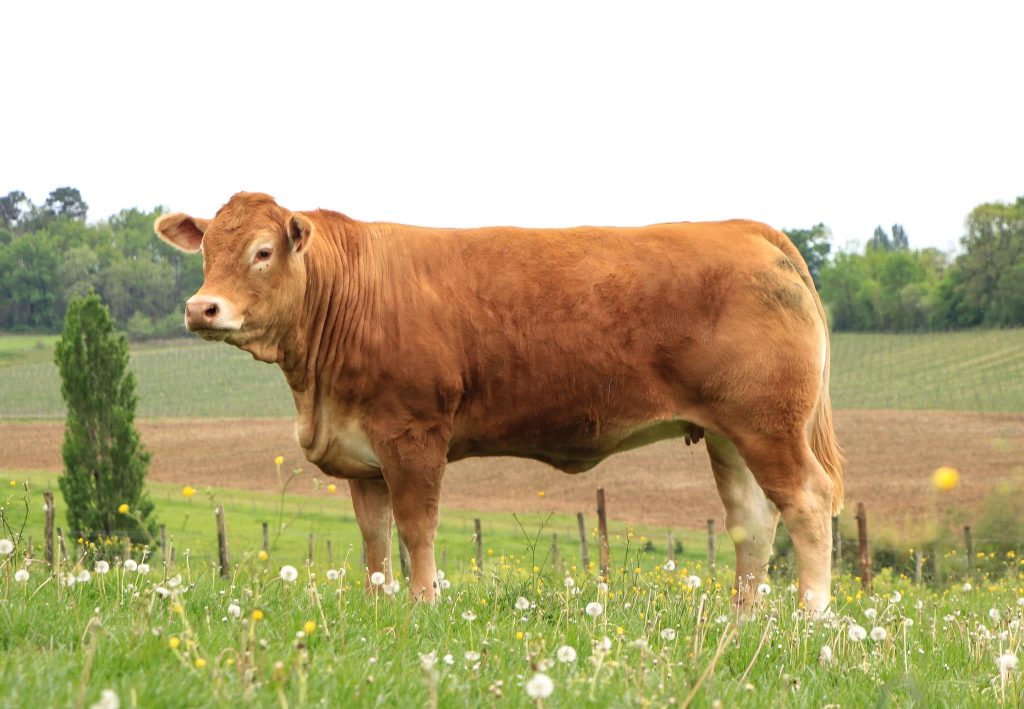
A cow produces, on average, one calf a year. For an exceptional female, that’s not much. Embryo transfer makes it possible to get far more, and to spread the genetics of the best mothers faster. At Château Pique-Sègue, embryo flushing and transfer are among the herd’s breeding tools.
The result: a single donor can produce several calves in the same year, carried by other cows.
The first benefit is multiplying what works. When a cow combines excellent maternal value, easy calving and polled genetics, you want several of her daughters, not just one a year.
The second is speeding up genetic progress. By concentrating births on the best mothers and the best bulls, the herd’s level rises faster. The third is distribution: a frozen embryo travels easily, which opens up sales to other breeders, including abroad.
Embryo transfer doesn’t create genetics, it multiplies them. Everything therefore depends on the donor and the bull. A cow like Joconde, who has produced six daughters by six different bulls, the first five all above average, shows what you expect from a great mother. These families are described in our article on our maternal lines.
Indexes play a key role here. Maternal value, milking ability, calving ease: they are what make it possible to spot the cows whose genetics deserve to be multiplied. Our guide to reading IBOVAL indexes explains how to interpret them.
A successful flush also depends on the donor’s condition and the quality of the recipients. Controlled nutrition and a healthy herd are part of the equation. It’s this link between genetic and nutritional performance that makes the estate’s Limousins an asset for the development of the breed.
Embryo transfer is part of the herd’s overall strategy, presented in our article on polled Limousin genetics. Are you a breeder interested in these genetics? Contact us to talk it over, or join our breeders’ area.

